-Sahibnoor Singh Sidhu When investigators from the Manhattan District Attorney’s Office entered the Metropolitan Museum of Art to execute a series of seizure warrants, the action signaled a structural shift in the administration of cultural heritage. The items detailed in the warrants included a marble head from the first-century Roman period, a bronze statuette dating back two millennia, and an ancient Egyptian gold diadem adorned with ram heads. These objects were being collected as evidence […]
Read MoreBlog
Who Owns an Aesthetic? Cord’s Album ‘91 Campaign and the Limits of Indian Copyright Law
by Sadie Ovenden When Cord released its Album ‘91 SS’26 campaign, internet commentary quickly observed that, with its symmetrical framing and saturated vintage colour palette, it resembled a scene from Wes Anderson’s The Darjeeling Limited (2007). Cord describes the collection as an ode to childhood summer holidays in India, to train journeys, family travel, vibrant markets, festive colours and traditional craft practices. The collection draws explicitly upon Indian visual culture, through hand embroidery, appliqué, smocking and patchwork […]
Read MoreUnited States v. Doyle: Wire Fraud, Void Title, and the Legal Limits of Market Trust in the Courbet Dispute
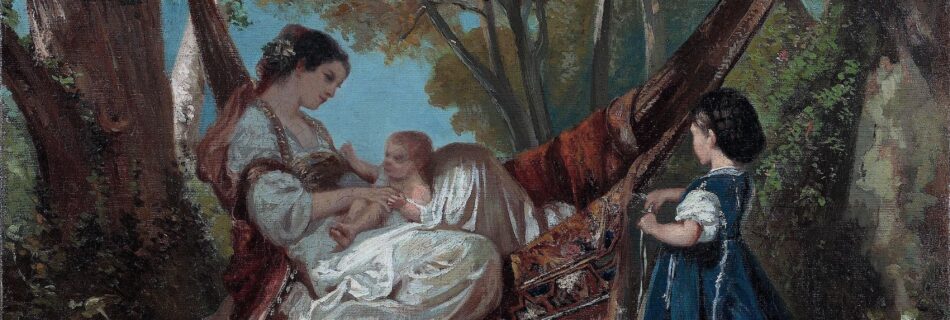
The reliance of the international art market on informal networks and unverified representations continues to create opportunities for sophisticated title fraud. The criminal conviction of Thomas Doyle in the Southern District of New York regarding the unauthorized disposition of Gustave Courbet’s Mother and Child on a Hammock highlights the legal risks inherent in transaction structures that lack objective verification. By examining the mechanics of the deception, the statutory frameworks governing title allocation, and the comparative […]
Read MoreMauritshuis Wins Rembrandt Dispute
When the dead leave their treasures to the living, they often attempt to script the future from beyond the grave, binding institutions to conditions that can last for centuries. This balance between the intent of an art donor and the operational freedom of modern cultural spaces has yet again been thrust into the spotlight following a landmark ruling by the district court in The Hague. The legal battle centered on a spectacular collection of twenty-five […]
Read MoreThe Colorado Artist Company Act: A Blueprint for Corporate Creative Governance?
The enactment of the Colorado Artist Company Act marks a shift in the intersection of corporate law and intellectual property law. Historically, companies have prioritised shareholder wealth maximisation, leaving creative professionals vulnerable during equity financing and corporate dissolution. This legislation introduces a distinct corporate form, the Artist Corporation, which mandates permanent creator majorities and safeguards moral and economic rights. This blog evaluates the mechanism of the Colorado statute, contextualises the historical imbalances in creative contract […]
Read MoreThe Agreement and the Troubled Provenance of the Jain Manuscripts of the Wellcome Collection
The Return of the Sacred? In a historic moment for cultural heritage management, the Wellcome Collection in London announced a commitment to return over 2,000 rare Jain manuscripts to the global Jain community. Believed to be the largest collection of Jain manuscripts held outside South Asia, the texts span four centuries, from the 15th to the 19th century. Written in Prakrit, Sanskrit, Gujarati, Rajasthani, and early Hindi scripts, the archive covers a vast expanse of […]
Read MoreThe Bureaucracy of Regret: France’s Quiet Beginning to Undo Colonial Plunder
Inside the dim, glass-walled galleries of the Musée du Quai Branly, the ghosts of the French empire are kept at a meticulous relative humidity of 50%. For decades, these objects, including carved ancestral figures from Gabon, royal sceptres from Dahomey, and reliquaries from Madagascar, existed in a state of ‘suspended animation’. They were protected by a legal doctrine as unyielding as the museum’s reinforced glass: inaliénabilité. Rooted in the 1566 Edict of Moulins, which sought to […]
Read MoreThe Living Archive: Re-evaluating Natural Heritage in the Anthropocene
The professional lexicon of art lawyers and museologists has historically focused on the portable and the tangible. For the longest time, the curatorial mission centred on coins, jewellery, and paintings—objects that could be catalogued, insured, and secured behind glass. Our legal frameworks were designed to protect the “object” as a static witness to human history. However, as global warming and rapid deforestation alter the physical reality of our planet, the definition of cultural property is […]
Read MoreTaxing the Pumpkin: Navigating Tax on Art Gains in a Transparent Market
The acquisition of art has been romanticized as a pursuit of the soul, an aesthetic dialogue between the collector and the creator. However, for those of us who spend their time engaged in law, art is also an asset class. The recent taxation of the gains from the sale of a Pumpkin sculptor held as part of a collector’s private collection as business income, has sent a tremor through the collecting community. The core of […]
Read MoreSpecialty Museums in India- A Reflection
Specialty Museums in India Museums have long been regarded as the custodians of a history’s essence. In India, multiple layers of cultural and social development have occurred over millennia, meaning that the traditional museum format cannot possibly accommodate for the unique, niche and often underrepresented side of history sometimes out of sheer paucity of space. This led to the birth of specialty museums that dive deep into those niche narratives and stories. However, budget constraints […]
Read More